
News Insights
CATHOLICISM, HISPANIC HERITAGE, AND AMERICAN IDENTITY
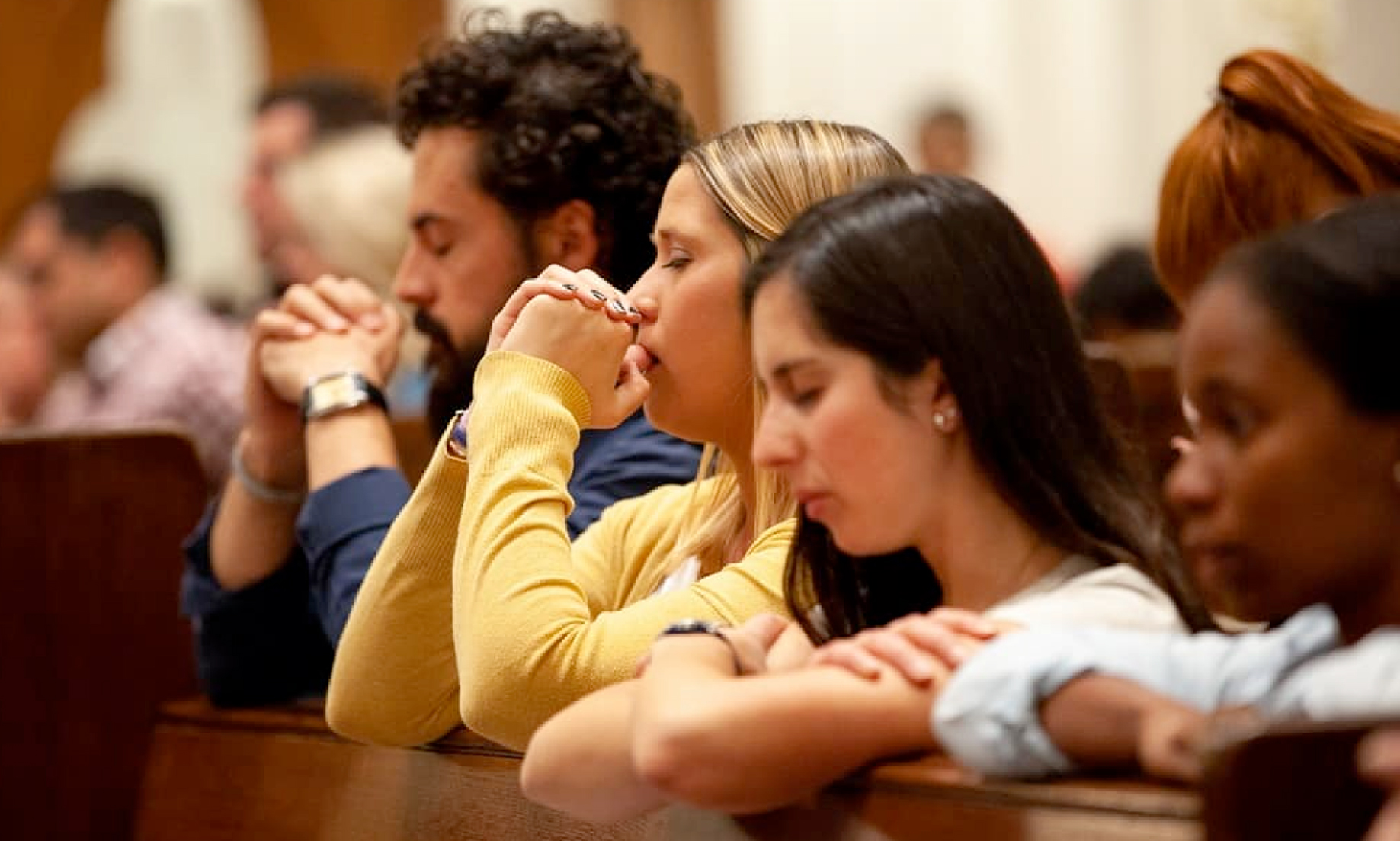
There’s a contemporary myth, fueled by superficial historical readings or fragmented sociological perspectives, that attempts to present Hispanic identity, the Catholic faith, and being American as elements in constant tension or conflict. We have been led to believe that to fully embrace the American spirit, we must dilute our Hispanic heritage, or that the universal openness of Catholicism clashes with a region’s cultural modernity and particularities. This notion is deeply wrong. A rigorous look at history and the essence of these three concepts reveals the contrary: not only are they not in opposition, but they interact and support one another in a perfect and vital synthesis, forming a unique identity framework that enriches the continent’s broader global landscape.
To understand this relationship, we begin with etymology and theology. The Word, Catholic, comes from the Greek katholikos, meaning universal. By definition, Catholicism cannot be a closed identity, an exclusive sect, or the private property of a single nation.


THE HOMELAND ON ITS 250TH ANNIVERSARY
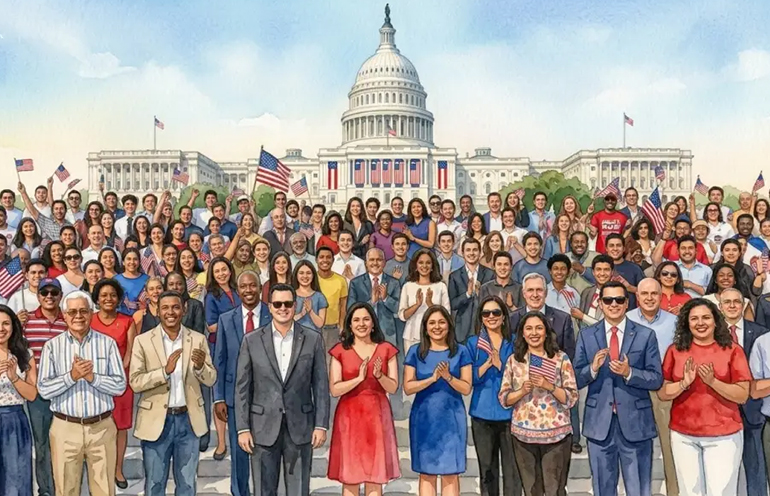
For anyone who has walked these lands for half a century as an immigrant, the word “homeland” is no longer an abstract geographical concept and rather becomes a truth felt in one’s skin, cultivated within one’s spirit. After fifty years in the United States, one comes to understand that the right to speak of the nation arises not only from an accident of birth, but from an act of will and love through which a shared destiny is built.
On the threshold of this 250th anniversary of the United States, we must rethink our collective identity, starting from a distinction that is at once political and spiritual: the difference between a nation and a homeland. A nation is the legal structure, the social contract, and the administrative machinery that organizes us.
Still, a homeland is the locus teologicus, a sacred refuge for the soul and a providential stage where the human being seeks transcendent meaning for their passage through history. From its origin, this nation was conceived as a homeland for those who sought a home where the dignity of man, that imago Dei that constitutes us, could flourish free from the past’s suffocating hierarchies.
250 AÑOS DE INDEPENDENCIA
El próximo 04 de julio, los Estados Unidos de América conmemoran 250 años desde que fue proclamada la Declaración de Independencia del Reino de Gran Bretaña, redactada principalmente por Thomas Jefferson, miembro del llamado “Comité de los cinco”. Un cuarto de milenio de Independencia y de identidad nacional, en un recorrido histórico en el que los Estados Unidos han logrado desarrollarse en todos los ámbitos del quehacer social y posicionarse como potencia mundial.
Esta importante fecha nos permite celebrar la grandeza de nuestra nación. Poderío y grandeza nacional que – entre otras razones – debe mucho a que este país decidió no aislarse del resto del planeta sino abrirse y abrir sus puertas para acoger en el seno patrio a los millones de migrantes que, provenientes de todos los rincones de la tierra, han llegado a territorio estadounidense en busca de mejores condiciones de vida, de progreso, de mayor suma de bienestar, de justicia social, de libertad y de paz.
Es propicia, entonces, esta efemérides nacional para reconocer el esplendor y poderío logrados por este país en el concierto de naciones; para agradecer la bienvenida y mejor vida que para millones ha significado llegar y domiciliarse en los Estados Unidos y, con ello, reconocer y agradecer, también, el evidente e innegable aporte que ha significado la presencia de sucesivas oleadas de inmigrantes, de diversas culturas y nacionalidades, quienes con enormes cuotas de renuncias, de esfuerzos, de sacrificio y de trabajo, han contribuido, de manera indiscutible e insustituible, al auge que hoy ostentamos como nación independiente y soberana ante el mundo.
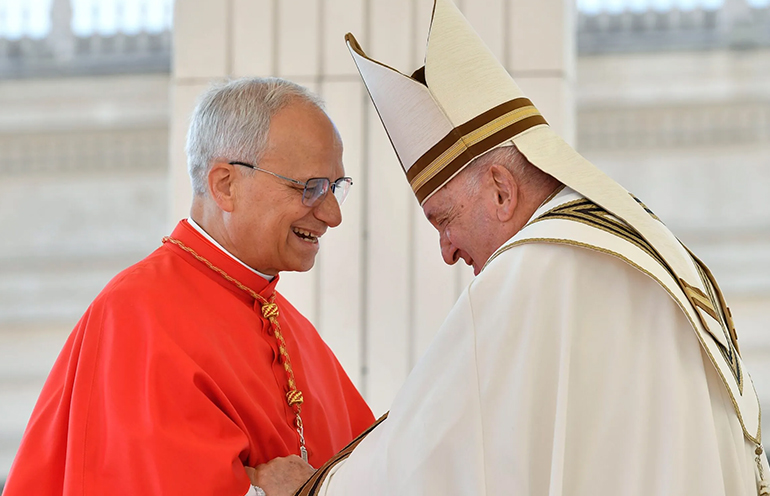
PETER and PAUL Francis and Leo XIV
This upcoming June 29 is the annual celebration in the Catholic liturgy of the solemnity of the holy apostles Peter and Paul, pillars on which the Church was founded at the dawn of Christianity. This day enables us to establish a comparison between the role that these two apostles exercised in the early days of Christianity and the mission that the pontificates of Francis and Leo XIV have carried out in these last fifteen years in the life of the Catholic Church and its evangelizing mission in society.
Between the apostles Peter and Paul, the differences in personality and in how they thought the early Catholic Church should develop are well documented. Still, more importantly, we should examine the complementarity that, in a relationship not without its tensions, as in the so-called “Antioch Incident” recounted in Galatians 2:11-14, resulted in a model of unity amid diversity. This is a model in which, although they differed in execution, they converged on the core of the Gospel message, a model of unity that, after two millennia, the Church continues to yearn for, urge, and seek through the task of “synodality.”
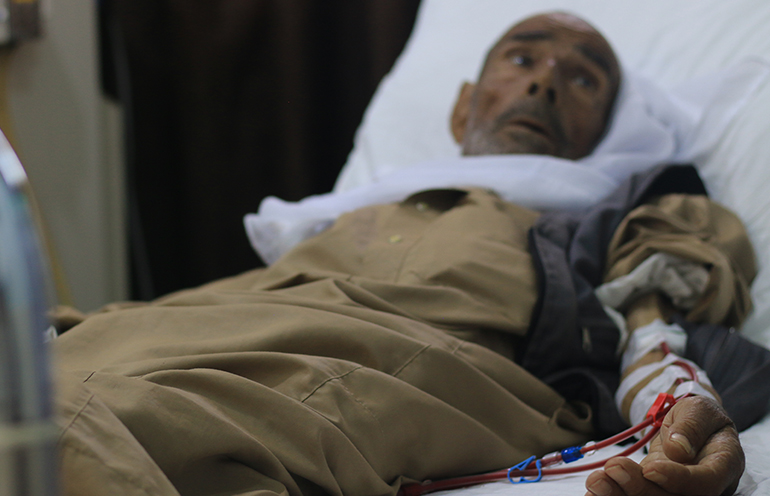
THE HUMANIZATION OF HEALTHCARE FOR THE POOR
Medicaid has been in the spotlight over the past year, facing charges of mismanagement and waste. However, a unique initiative underway in New York State holds the promise of radical reform that will sharply reduce Medicaid spending, while making budget cuts unnecessary—even as the quality of care for the poor dramatically improves.
The initiative is driven by the conviction that traditional medical treatments must also address patients’ social needs, which can cause or exacerbate medical and behavioral conditions. These needs are known as Health-Related Social Needs.
The overarching goal is to integrate Community-Based Organizations (CBOs) and their social expertise into the existing primary care and behavioral healthcare system. Research has shown that physical health only accounts for about 20 percent of overall health and well-being. The CBOs and their expertise are necessary in order to complement traditional forms of medicine.
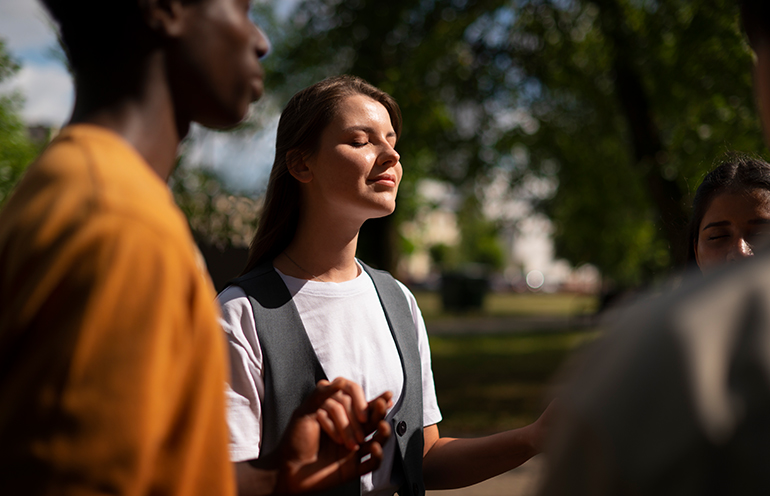
MAGNIFICENT HUMANITY in need of evangelization
The human being is the sum of many dimensions: historical, biological, religious, sexual, economic, political, recreational, familial, social, psychological, ecological, and so on. Each of these dimensions is expressed in diverse ways throughout the life of each human being. Social institutions foster the development of these dimensions and their various manifestations in each person by providing the necessary social spaces and structures over time.
Therefore, the progress of a given society is measured by the greater or lesser degree of harmonious growth that each citizen achieves in the development of most of their dimensions.
Among social institutions (economic, political, cultural, etc.), many sociologists regard religion as the “guiding institution” or “leading institution” because it enjoys the greatest prestige, provides the prevailing interpretation of reality for the entire culture, and, consequently, establishes the criteria by which values are judged. (Cf. González Anleo, Juan, Understanding Sociology [Para comprender la Sociología], EVD, p. 182).
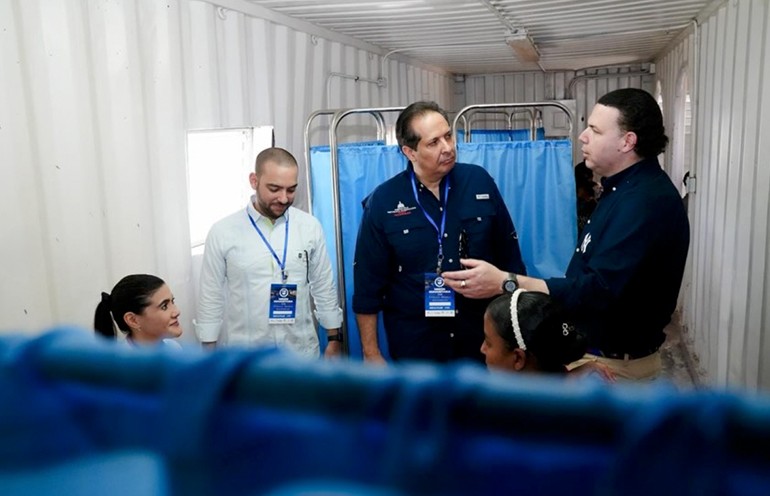
Stella Maris Mission 2026: Transforming Lives on the Banks of the Ozama
The impact of the Stella Maris 2026 Humanitarian Mission in the El Dique sector, on the banks of the Ozama River, transcends cold statistics to emerge as a living testimony of love, respect, and absolute dedication to others. Under the profoundly humanistic vision of the Dominican Medical Dental Society (DMDS), an organization founded in 1977, and with the fundamental support of SOMOS COMMUNITY CARE and Dr. Ramón Tallaj, an army of seventy volunteer doctors and specialists from New York embarked with a single sacred purpose: to restore health and dignity to those most in need. This undertaking, which had the encouragement and spiritual support of Bishop Manuel Ruiz and the backing of the insurance company HEALTHFIRST, not only delivered a massive medical impact, but also became a hopeful embrace for a community that bravely fights against poverty and oblivion on the margins of Dominican modernity.
Over five days of tireless work, from Monday, March 9, to Friday, March 13, 2026, these health professionals transformed the daily reality of thousands of families, demonstrating that medicine reaches its fullest potential when it detaches itself from commercial interests and serves human well-being. Logistical efficiency formed a pillar of this charity: from the first contact in the orientation area, where 3,985 citizens were welcomed with a smile and patiently guided to the appropriate specialties, to the rigorous medical triage process that evaluated 2,204 people under the expert direction of specialists such as neurosurgeon Dr. Amaury García. Every action, no matter how small it seemed, was imbued with a deep sense of service and the recognition that each patient is a human being with a story that deserves to be heard and healed.
Francis, The Pope of Surprises (Live)
Special YouTube premiere in Spanish commemorating the 1 Year anniversary of Pope Francis with a screening of the documentary Francis: The Pope of Surprises.
The program is expected to begin with a brief presentation by Dr. Ramón Tallaj and Mario Paredes (approximately 5 minutes), followed by a prayer and reflection led by Cardinal Seán O’Malley.
The event will then continue with a screening of the 52-minute documentary highlighting the life, mission, and global impact of Pope Francis.
Following the screening, a live Q&A discussion (approximately 15 minutes) is planned with Seán-Patrick Lovett (co-director of the documentary) and Archbishop Ronald Hicks, reflecting on the film and the ongoing influence of Pope Francis’s teachings.
POPE OF SURPRISES
Join us for a special YouTube premiere in Spanish commemorating the 1 Year anniversary of Pope Francis with a screening of the documentary Francis: The Pope of Surprises.
The program is expected to begin with a brief presentation by Dr. Ramon Tallaj and Mario Paredes (approximately 5 minutes), followed by a prayer and reflection led by Cardinal Seán O’Malley.
The event will then continue with a screening of the 52-minute documentary highlighting the life, mission, and global impact of Pope Francis.
Following the screening, a live Q&A discussion (approximately 15 minutes) is planned with Seán-Patrick Lovett (co-director of the documentary) and Archbishop Ronald Hicks, reflecting on the film and the ongoing influence of Pope Francis’s teachings.
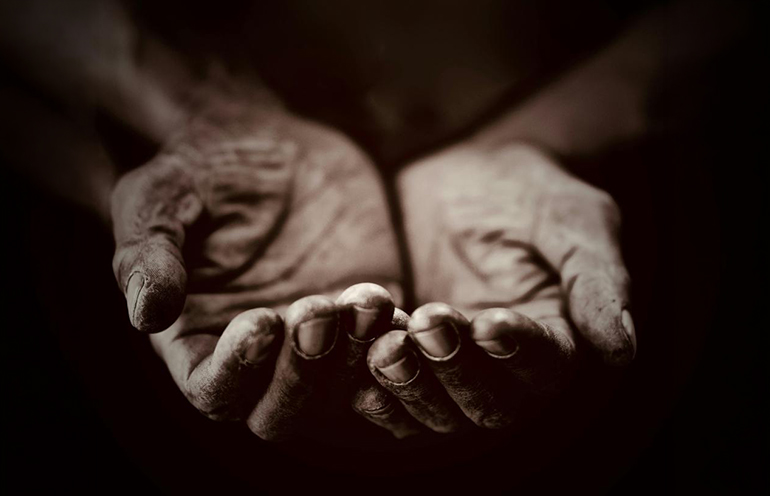
In service to the poor, social care has a higher mission
The delivery of healthcare for New York’s Medicaid recipients is currently undergoing a historic transformation. Launched in the winter of 2025 with an initial $500 million investment, a bold state project is finally bridging the gap between traditional medical coverage and the social realities that dictate a patient’s health. This shift recognizes a fundamental truth: a doctor cannot "fix" a patient’s health if they cannot address the social hazards of the patient’s life.
There are nine Social Care Networks (SCNs) tasked with connecting Medicaid beneficiaries and their doctors with Community-Based Organizations (CBOs) that have expertise in specific social care areas. As one of these nine, SOMOS Community Care—a network of over 2,500 independent doctors serving more than one million Medicaid beneficiaries—is proving that the most effective healthcare happens when we treat the whole person.
The process promotes close doctor-patient collaboration, with doctors becoming intimately aware of patients’ social needs, which are known as Health-Related Social Needs (HRSN) and Social Determinants of Health (SDH). Timely intervention on this front prevents illness or delays its worsening, resulting in significant savings.