
News Insights
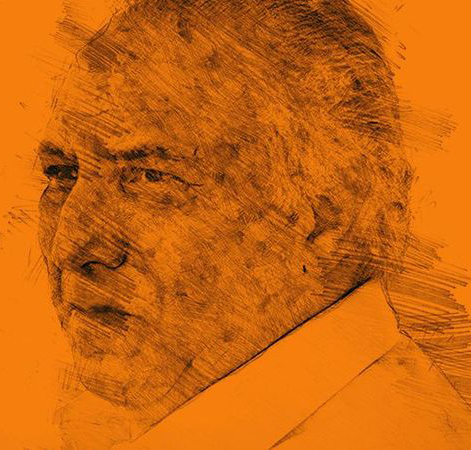

CHRISTIAN FORMATION AS MISSION AND PATH
Rediscovering formation in Christian life is not a minor issue, nor is it an activity reserved for those who are professionally engaged in religious studies. Instead, it is an essential dimension in a life of faith and ecclesial responsibility, especially in times like ours, amidst diluted references, fragmented discourses, and a population where many people live without clear interior direction. Formation doesn’t simply mean acquiring knowledge, but learning to live meaningfully, recognizing truth, cultivating an open gaze on the world, and remaining attentive to God’s action in history. Formation isn’t a matter of accumulating data; rather, it’s about constructing a way of thinking and inhabiting the world, aligned with the Gospel.
In the Christian life, formation means participation in a demanding process that requires constancy, humility, and openness. True formation is born of continuous contact with Sacred Scripture, read in the light of the living Tradition of the Church, and with the Magisterium, which guides the People of God through the cultural, social, and spiritual challenges of every age. Among the most necessary areas of this formation is a serious understanding of the Social Doctrine of the Church, which offers precise criteria for understanding contemporary reality and responsibly committing oneself to it. Social justice, respect for each person’s dignity, fostering the common good, care for one’s work, the economy, peace, and the health of our earth cannot be approached from the lens of improvisation or opinion, but from a profound reflection that integrates faith and reason, pastoral experience, and critical thinking.
At the same time, Christian formation cannot occur in isolation or a purely intellectual setting. It must be rooted in sacramental life, personal and liturgical prayer, spiritual accompaniment, and the concrete experience of community. Only when knowledge is linked to constant spiritual practice, the celebration of the Eucharist, frequent participation in the Sacrament of Reconciliation, and listening to the Word can it become wisdom. And when this spiritual life is lived in a fraternal environment, where searches are shared and answers are confronted, formation bears fruit. No one matures in faith in isolation. Our communities allow us to compare what we have learned, illuminate what we have experienced, and sustain what we have chosen. There, you also learn the value of patience, dialogue, and respecting others’ pace.
In this formative journey, what is at stake is not only personal growth but the ability to read the world through an evangelical lens. That is why this formation must offer not only religious knowledge but also access to other disciplines and knowledge that allow a better understanding of society, culture, and history. Christians cannot ignore their world. They are called to immerse themselves within it, with awareness, intelligence, and responsibility. They need intellectual tools, cultural sensitivity, and a deeply introspective life. This forms the foundation of what some have called Christian humanism: a way of thinking and living that recognizes the centrality of the person, their transcendent vocation, and their need for truth, justice, beauty, and communion.


Foundation Repairs Hospital - Boat for Communities
The Dr. Ramon Tallaj Foundation has donated funds to repair the hospital boat serving the Ozama River in Santo Domingo, Dominican Republic. This vital vessel brings primary healthcare services to remote and vulnerable communities along the riverbanks, where access to medical care is often scarce or nonexistent. By restoring the boat, the foundation ensures that doctors, nurses, and essential medical supplies can continue reaching those most in need.

Enough Already! THE ISSUE OF IMMIGRATION
The phenomenon of immigration, where masses of people move temporarily or permanently from their place of origin to another, in search of better living conditions, has existed since the dawn of humanity, in all corners of the earth. Immigration is a complex issue in which multiple causes and characteristics converge in the United States and worldwide.
Human immigration occurs when people are attracted to a destination or expelled from their place of origin. Immigrations have a global impact, both in the societies where the exodus originates and in those that receive the immigrants. Today, amidst the rising complexity of the immigration phenomenon, new factors further complicate the issue, including climate change and emerging and escalating geopolitical conflicts.
In 2022, the percentage of recent immigrants in the United States reached 14% of the population. This represents an enormous number of people from diverse backgrounds, seeking protection, economic stability, and social stability, as well as family reunification in many cases.
Nearly forty years have passed since the presidency of Ronald Reagan, who, in 1986, granted amnesty to almost three million undocumented immigrants with the “Immigration Control and Reform Act” (IRCA). Successive political campaigns and governments, alternating between this nation’s two traditional parties, have mishandled and exploited the issue of immigration and mocked the hope of the masses, without effectively and definitively resolving the plight of the millions of migrants who work honestly, contribute their labor force to the progress of the United States, and pay taxes only to live in the shadows, unable to enjoy the full rights, security, protections, and opportunities open to citizens.
2025 Charity Golf Outing
On Monday, July 7, the Dr. Ramon Tallaj Foundation proudly hosted its second annual golf outing, bringing together an unforgettable lineup of Major League Baseball legends, including Hall of Famer Mariano Rivera, Chicago Cubs icon Sammy Sosa, New York Yankees Legend Orlando "El Duque" Hernández, Alfonso Soriano, Julián Tavárez, Ramiro Mendoza, and Jim Leyritz. Their presence, alongside our valued supporters and guests, made the day truly special.

HOPE VACATIONS AND REST
TO FIND TRUTHS AND BUILD HOPE VACATIONS AND REST
With summer, vacation season arrives for many people and institutions around the world. This is a time and space in the life of the human being that, well managed, has a comprehensive impact on the person, both physically and mentally, which plays out in their interpersonal and social relationships and the productivity of companies and society as a whole.
Vacations are more than a luxury; they are a biological and psychological need. They recharge new energies, reduce stress, prevent diseases, and reduce exhaustion and fatigue (burnout) from our draining daily lives and routines. Vacations help us disconnect from overwhelming workloads and reduce anxiety, allowing us to find our sense of well-being.
Vacations allow us to clear our heads and open ourselves to new existential horizons, to new projects and perspectives in life, strengthen our fundamental and necessary affective ties for life, and allow us to rediscover interests and activities that enrich our lives and health and that – due to the daily hustle and bustle – we postpone or abandon.
Seen this way, vacations are a time to invest in our health, our comprehensive personal, family, and social well-being, and our work and professional performance. In short, vacations are the appropriate time for rest.
We understand that rest does not mean abandoning our usual duties, tasks, and obligations, so we can dedicate ourselves to sleep and do nothing. If we ignore that truth, vacations and everything associated with them would become a waste of time and opportunity.
Graduates' Dinner
Honoring Excellence in Health: A Night of Gratitude and Celebration
Last week, the Dr. Tallaj Foundation hosted a heartfelt dinner in honor of its scholarship recipients who have recently graduated with distinction in various health-related fields. The elegant evening brought together graduates, families, medical professionals, and community leaders to celebrate the remarkable achievements of these students, many of whom were the first in their families to pursue higher education. Through the Foundation’s support, these young professionals overcame financial and personal barriers to complete demanding academic programs, earning top grades and demonstrating an unwavering commitment to the well-being of others.
Thank You, Doctor!
“Thank You, Doctor!” (thankyoudoctor.org) is a global campaign that seeks to value the humanizing role played by the primary care physician, also known as the family doctor, in the healthcare system and in society.

"With you I am a Christian, and for you I am a bishop"
Habemus Papam! On May 8, the College of Cardinals announced the good news: We have a new Pope! This election and event assure the Catholic Church of the millennial apostolic succession in the Petrine ministry. We have a Pope! This good news fills us with joy and hope.
His main biographical and pastoral facts – his Augustinian spirituality, the name he chose to exercise his papacy, his initial message from the balcony of St. Peter's Basilica and the few characteristics of the new Pope's profile and personality that we are just beginning to know, indicate and shed light on the possible path along which he will exercise his pastoral ministry as the universal leader of the Catholic Church, and a spiritual leader for humanity.
ROBERT FRANCIS PREVOST MARTINEZ, was born on September 14, 1955, in Chicago, Illinois, United States, which makes him the first pope from the United States and the 267th in the history of the Catholic Church.
From his parents, Louis Marius Prevost and Mildred Martínez, he inherited a racial and cultural mix of Italian, French, African, and Spanish ancestries. Robert Prevost studied mathematics, theology, and Canon Law. His life and novitiate as a member of the Order of St. Augustine began in 1977, until he became – for two terms – the Prior General of the Augustinians, which also makes him the first pope from this religious community, with a presence in over 50 countries.
As an Augustinian priest, he conducted – for many years – his pastoral and missionary ministry in Peru until he was appointed Bishop of the diocese of Chiclayo and acquired his Peruvian citizenship. This dual citizenship also makes him the first Peruvian pope and the second Latin American. Finally, in the Vatican curia, he served as Prefect of the Dicastery for Bishops.
The evangelical and Christian imprint of St. Augustine of Hippo guides and marks his spiritual and religious life, primarily characterized by a tireless search for God in and from the very interiority of the human being. This is a search carried out in community life, with love as the center of everything. This is a love that is God's grace to transform, sustain, and guide human beings in humility to the whole truth: that of knowing we are children of God, serving all as brothers and sisters.

With the “smell of sheep”
By order of the beloved Pope Francis, the Catholic Church is immersed in celebrating a Holy Year, a Jubilee Year, dedicated to reflection, decision-making, and concrete actions for HOPE, in a world that faces serious challenges.
This year offers a propitious opportunity for believers in Christ, as a Church, to be “light and salt” for the world, witnesses of hope, a Hope that does not disappoint or die. Our hope is in God Himself, in the God of life and mercy revealed to us by Jesus and preached – through gestures and words – by Pope Francis.
And this Year for HOPE summons the whole Church to two unexpected events: first, the end of the pontificate and a farewell to the house of our father, Pope Francis, who leaves a legacy that fills the Church and world with hope.
Second, another reason that fills us with hope is the gathering of the Cardinals of the Church who will elect the new Pope, the political head of the Vatican State or Holy See, but, above all, a guide in the faith of the world’s Catholics and the spiritual leader of humanity.
This coming May 7, the elective sessions begin, behind closed doors, to decide who will succeed Francis in the See of Peter and as bishop of Rome.
In this time of wagers and betting on which cardinal will be named the new pope, allow me to recall and point out some qualities that – in my opinion – the new pope and his Petrine ministry should have as conditions for contributing to the construction of the time and space for hope in the Church and the world.
Paying Tribute to Pope Francis
Dr. Ramon Tallaj and Mario J. Paredes pay tribute to Pope Francis during a special event in Rome, reflecting on his global impact and spiritual leadership. An excerpt from their exclusive interview is now available on CBS News.

His Hope Will Not Die!
My Tribute to Pope Francis
For the Catholic Church to be, infallibly and unfailingly, the community of believers and disciples of Jesus Christ, it must be adjusted in accord and harmony with the Gospel of the carpenter’s son of Nazareth, his Good News, i.e., with his words and criteria. This is the only way believers in a faith community can be the “light and salt” of the earth.
Pope Francis has died, and this, precisely, was his main work, legacy, and what he will be remembered for by posterity in the Church and in the history of humanity: to have tried – in season and out – to bring the lives of Catholics and all humankind closer to the Gospel’s principles and values. He fought to build a kinder world, one that is more just, humane, supportive, and fraternal.
He carried out this endeavor throughout his life as a man and Christian, and especially as he conducted his Petrine ministry, with the profound certainty that flows from the life of Jesus of Nazareth: that all human beings have the dignity of being children of the same God, the good Father and Creator, and this is why we are all brothers and sisters, sharing solidarity today – in good and evil – and a common destiny.
This evangelical conviction shaped the whole life of the porteño from Argentina, a descendant of Italian immigrants. It shaped the man, the chemist, the Jesuit priest, and the Pope, whom I had the privilege of being a disciple of in Buenos Aires.
Still shocked by the news and with deep regret, I write these lines as a tribute full of affection to someone who– thanks to life and on many occasions – I had the honor of getting to know personally and enjoying his friendship and teachings. In recent years, for example, in two private audiences, the Holy Father received more than 1,100 doctors from the SOMOS COMMUNITY CARE Organization I work for and he encouraged us to launch the Thank you, Doctor! campaign which mission is to humanize healthcare, specially for the most vulnerable. These encounters today are indelible in the history of our institution. At the same time, this is a tribute of gratitude that, together with the whole Church and all humanity, we very deservedly owe and pay to the much-loved Pope Francis.
I believe that I echo the simultaneous sadness and joy that many are experiencing right now. We experience sadness for the departure of such an illustrious human being, an exemplary Christian, and a good shepherd. We also experience joy because we are left with his testimony, his example of life, and a path of humanity and holiness, open for us to follow in search of better times for Catholicity and the whole world.

Pope Francis 1936 - 2025
We extend our deepest condolences to the Catholic community and all those mourning the passing of Pope Francis. His unwavering dedication to compassion, humility, and social justice touched countless lives across the world. As a shepherd of faith, he guided the Church with wisdom and love, leaving behind a profound legacy of unity and hope. In this time of sorrow, we stand in prayer and solidarity with all who grieve his loss. May his soul rest in peace.