
News Insights


By the SICK, We Will Be Known
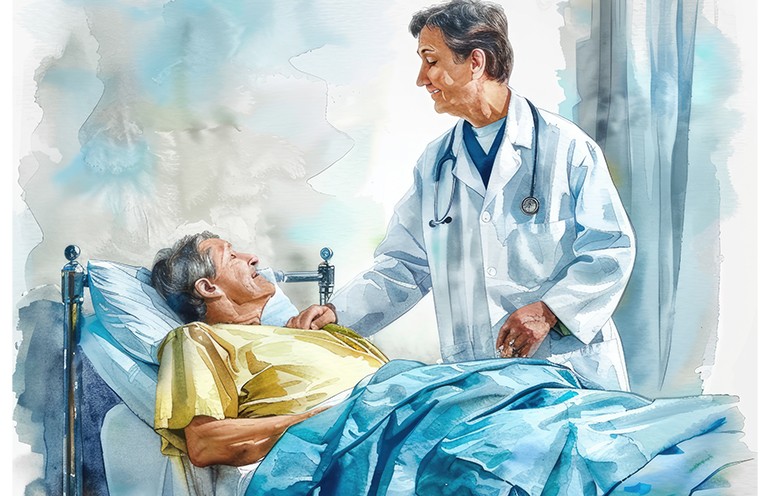
Every February 11, the world observes THE DAY OF THE SICK. For 34 years, the Catholic Church has observed this day with a message from the Pope, which, in 2026, will reflect on: “The compassion of the Samaritan: loving by bearing the pain of the other.” This 34th Day of the Sick will have as its epicenter the city of Chiclayo in Peru, the diocese that served as the seat of the episcopal ministry of then-Monsignor Robert Prevost (2015–2023), now Leo XIV.
St. John Paul II established the World Day of the Sick in 1992 to dedicate space to prayer, solidarity, accompaniment, and reflection on the shortcomings and hardships in health experienced by millions of people.

A New Year’s Message
The arrival of a new year, a universal celebration, varies across cultures, in date and rituals. We celebrate a new year’s arrival according to our Gregorian calendar, i.e., according to the way we mark history in years and centuries, starting with the birth of Christ.
But for all human beings, the beginning of a new year contains deep meaning and messages with validity for all humanity. Because, beyond changing how we write the date, this celebration represents many of our ongoing longings for change, renewal, and hope for better times.
The beginning of a new year, in all cultures, is an opportunity for evaluation, inventory, good resolutions, to close cycles, and to welcome new beginnings in the different areas of human existence. We celebrate the new year with the joy of being able to rewrite our personal, family, and social history, leaving the old and the bad behind for the hope of better stories and a better world.
The arrival of a new year asks us for moments of reflection, self-examination, and introspection. A new year, a new beginning, asks us all to pause along the way, to straighten the path, evaluating and being grateful for what we have lived and learned, while addressing the challenges that await us all in the new year. Only by carefully weighing and considering our achievements and mistakes can we – through human growth – make the coming year a year that is truly “new”.
Christmas reminds us...
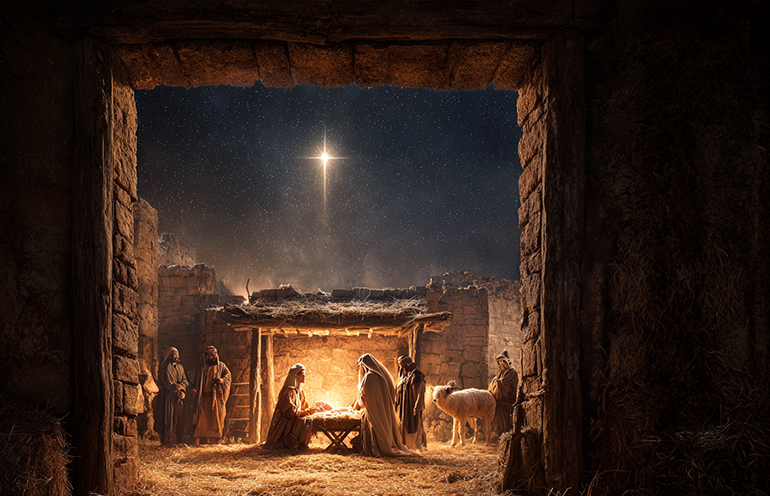
The Christmas season, and the pause it brings, with all its celebrations, music, lights, commerce, Christmas trees, gifts, encounters, dinners, cards, trips, etc., has a reason: the commemoration of the birth of Jesus of Nazareth, whom, as Christians, we confess as the Son of God, our Lord and Savior, the “Way, Truth, and Life.” But the value of this Christian celebration and its religious significance have transcended its origins, becoming a global feast, because the life and work of Jesus of Nazareth continue to be relevant and challenge every man, all humanity, regardless of the culture, geographical place, and beliefs of each human being.
Among the many messages that Christmas – persistently – contains and calls to mind is compassionate and fraternal love. The call and fundamental teachings of Jesus of Nazareth show us the face of God as the good Father of all, so that, living as his children, we can love each other as brothers and sisters and build, in fraternity, relationships, society, and our world. Through compassionate and fraternal love, we are capable of solidarity and forgiveness. Human coexistence is possible, and this fraternal love, manifested through our work, can reach, manifest, and unfold, especially among the world’s neediest and most vulnerable.
Without fraternal love, without human fraternity and filiation with God, man – arrogantly – becomes the lord of others. Human coexistence transforms into a jungle of competition and struggle, divisions and hatred, borders and differences that make life impossible.
Why do we GIVE THANKS?
THANKSGIVING DAY is the most important celebration of the year in the United States. With get-togethers, family dinners, gifts, trips, and reunions, on the last Thursday of November, the country comes to a halt to celebrate.
The historical origin of THANKSGIVING dates to 1621, and its origins and meaning are controversial for some groups, especially Native American communities. Although it is not originally a religious holiday, THANKSGIVING commemorates a harvest celebration between the Plymouth settlers and the Wampanoag Native Americans, and celebrates a fundamental human experience: gratitude, the ability to be grateful, the state of being grateful, and to live gratefully.
This human capacity arises in those who can perceive the generosity and loving presence in all that we are and have, as a gift from the Transcendent and from others.
THANKSGIVING DAY is a day of family gatherings, an occasion that encourages reconnection and the union of the family, with the dinner table as its center and symbol. However, in recent years, the tradition of “Friendsgiving” has emerged, in which friends gather to celebrate, adapting the holiday to a more open, informal, and modern context.
PARA USTEDES SOY OBISPO; CON USTEDES SOY CRISTIANO.
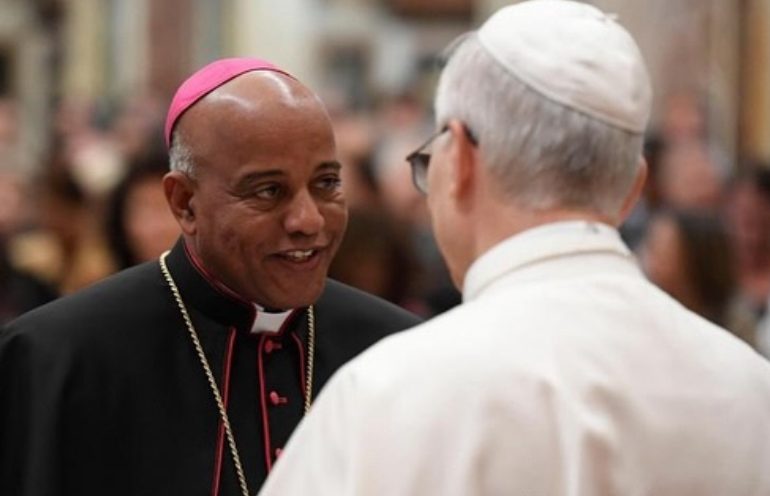
La alegría que suscita el nombramiento de dos nuevos obispos —Manuel Antonio Ruíz de la Rosa, elegido primer obispo de la recién creada diócesis de Stella Maris en República Dominicana, y Carlos Tomás Morel Diplán, designado arzobispo coadjutor de Santo Domingo— trasciende la noticia eclesial. Es también una oportunidad para reflexionar sobre la esencia del episcopado y sobre lo que el Papa Francisco ha llamado “la belleza de una Iglesia con pastores que huelen a oveja”. En medio de un mundo cansado de discursos y sediento de autenticidad, la figura del obispo vuelve a interpelar desde su raíz más profunda, ya no como poder, sino como servicio; no como distinción, sino como entrega.
La nueva diócesis de Stella Maris nace como signo de esperanza y cercanía. Su nombre —“estrella del mar”— evoca a María, guía luminosa en medio de la noche, consuelo en las tempestades. Es significativo que esta diócesis surja para acercar la Iglesia a las comunidades dispersas del litoral, a quienes viven lejos de los grandes centros urbanos, y que su primer pastor sea un hombre de pueblo, formado en la escucha, la educación y el acompañamiento. Manuel Ruiz, conocido por su trabajo pastoral y por su sensibilidad ante los problemas sociales, políticos.
Económicos éticos y ambientales, encarna un estilo de liderazgo que no se construye desde la autoridad jerárquica, sino desde la presencia constante entre su gente. Esta actitud va de la mano de aquella máxima de San Agustín de Hipona, que resume correctamente su programa: “Para ustedes soy obispo, con ustedes soy cristiano.”
Esta frase encierra una filosofía del ministerio episcopal. El obispo no es un gerente de lo sagrado ni un custodio de estructuras, es un hermano mayor, un servidor que vela por la unidad, no desde arriba, sino desde dentro. Su vocación es la de quien “vigila” no para controlar, sino para proteger. No está ahí para mandar, sino para cuidar. En un tiempo en que tantas instituciones pierden credibilidad por haberse distanciado de las personas, la Iglesia ofrece un modelo distinto de autoridad: una autoridad que se arrodilla, que acompaña, que se hace servicio. Y es precisamente eso a lo que el Papa León XIV nos convoca, siguiendo las ideas del Papa Francisco. Pues, una Iglesia que se encierra en sí misma envejece; una Iglesia que se abre al Espíritu renace.
El nombramiento de Carlos Morel como coadjutor de Santo Domingo confirma esa misma lógica de servicio. Asumir la tarea de acompañar a un arzobispo en la etapa final de su ministerio no es un ascenso, sino un acto de obediencia y humildad. Es aprender a servir en la transición, a colaborar en el silencio, a preparar el relevo con fidelidad y sin protagonismo. La Iglesia crece cuando sus pastores se reconocen herederos y servidores de una historia común, cuando la sucesión apostólica no se vive como sustitución, sino como comunión. Por eso merece gratitud el actual arzobispo, que con espíritu fraterno acepta y acompaña y guía a su sucesor en esta nueva etapa, mostrando que la autoridad cristiana no consiste en retener, sino en entregar.
Faith, Leadership, and Service
Mario J. Paredes joins Vida Integral on Televida with Ermis Feliz, where he shares an inspiring journey through his life and vocation of service. During the interview, he reflects on the values that have guided his path and emphasizes the importance of Christian leadership grounded in integrity, faith, and commitment to others amid the challenges of the 21st century.

HISPANIC HERITAGE MONTH 2025 Celebrate, Think, Decide, Act
In the United States of America, by legal mandate, from September 15 to October 15, we annually celebrate HISPANIC HERITAGE MONTH, when we recognize and honor the growing presence, influence, and contributions of the Latino/Hispanic American community to this nation’s history, society, and culture.
For the millions of Hispanics who live here, these yearly celebrations must transcend mere parades, music, and national costumes. This must be a month in which, as a community, we evaluate, review, study, understand, and renew the importance of our historical and current presence in the United States and, at the same time, confront the challenges we face, now and in the near future, to make our life and existence more valid and stronger in the United States.
In this annual celebration of our Hispanic heritage, which traces its origins to 1968 and the presidency of Lyndon B. Johnson, and its expansion two decades later by President Ronald Reagan, we celebrate the enormous richness and diversity of the culture of the millions of men and women who come here, from the South or Latin American countries, Spain, or the Caribbean, and that, daily and with tenacity, honesty, and work, exalt our roots and build the greatness of this nation.
We celebrate the diversity and amalgamation of our national and regional cultural histories and identities, values, dialects, accents, music, traditions, cuisine, and customs from so many different places. We remember our historic presence in what is now the United States, a presence long before the constitutional founding of this nation. We celebrate our arts and knowledge, as well as the memory of all Hispanics who, in our countries of origin and here in the United States, have stood out and continue to stand out in all areas of social and cultural endeavor: leaders, artists, historians, athletes, politicians, teachers, scientists, and more.

The Spirit that Renews the Mission
The International Academy of Catholic Leaders is experiencing a time of grace and discernment. We are not simply talking about reorganizing structures, but rather about an inner purification, returning to the living source that gave us our origin, rediscovering our reason for being, and preparing a new generation of Christian leaders who serve the world with the truth that liberates and the charity that transforms. This mission is not "a pretty idea" or "a romantic dream"; it is a concrete vocation entrusted to us by the Church, which asks us for intelligence, prayer, study, and service. In this journey, the Academic Council is both the pillar and core, the place where reflection becomes listening, where dreams are in sync with faith, and the Gospel illuminates our teaching.
An Academic Council is not a decorative figure or an institutional formality; it is the living conscience of a community that desires to serve the common good. When thinking becomes hasty and superficial, the Council reminds us that the formation of leaders demands depth, serious dialogue, an interdisciplinary perspective, and a vision of the person rooted in faith. We do not seek merely brilliant professionals or sharp critics, but hearts that know how to discern and act with the wisdom of the Gospel. Jesus taught us, "Anyone who wants to be first must be the very last, and the servant of all" (Mark 9:35). True leadership, in the eyes of God, is not about dominating but serving, and when someone becomes a humble servant, an authentic leader is born. The Academic Council is the guardian of this vision; it ensures that every formative proposal is an invitation to serve, to live in justice and truth.
Some people ask us if a Catholic academy makes sense in such a secularized world. We respond to them with the words of Pope Francis, “Let us not allow ourselves to be robbed of hope!” (Evangelii Gaudium, 86). Hope is not naiveté or empty optimism; it is the certainty that God's love continues to act in history, even when everything seems adverse. This hope sustains us, and it is the treasure we wish to pass on to those who learn with us.
Our mission is informed by the Social Doctrine of the Church. More than a century of wisdom reminds us that faith does not run away from the world, but rather fertilizes it from within. Leo XIII, in Rerum Novarum, taught us that social justice is inseparable from human dignity, which can never be reduced to a part of the economic system. This holistic perspective informs the work of the Academic Council. We aim to cultivate leaders who can unite faith and culture, thought and social commitment, with a critical yet compassionate sensitivity to the challenges of our time.
In Caritas in Veritate, Benedict XVI left us these words: “Charity in truth . . . is the principal driving force behind the authentic development of every person and of all humanity” (CV, 1). This is our compass. For any formation not born out of love becomes a distant accumulation of data, and any charity without truth dissolves into sentimentality. The Academic Council exists so that both may walk together, so that intelligence may be illuminated by faith, and so that faith may express itself through reason and discernment in the world.
We are not, nor do we want to be, an Academy that closes in upon itself, concerned only with meaningless titles or programs. Our task is greater: to think, to dialogue, and to form men and women who, through their faith, are a leaven of justice, peace, and dignity. Pope Francis has said it clearly, “It is not by proselytizing that the Church grows, but by attraction” (EG, 14). We want to be that place of attraction, not by imposing ideas, but by showing that academic excellence, spiritual life, and social commitment can unite in a single vocation.

THE TIME FOR COMMITTED LAYPEOPLE
The time for committed laypeople has arrived. This is not the time to remain silent or accept things as if nothing can change. It is time to look up, listen to the voice of the Spirit, and courageously assume the mission that Christ entrusted to his Church: to serve, transform, and bring hope where darkness has settled. This is the time for men and women who truly believe in the Gospel, who know that faith is not confined within walls, but is brought to life in culture, in politics, in the economy, in institutions, and in every corner where human dignity is wounded.
After more than twenty years of history, the International Academy of Catholic Leaders is entering a stage of maturity and profound renewal. We have traveled a long road, marked by challenges, joys, and life lessons that have shaped us. Today, we feel the Spirit urging us to take a further step, to renew our forms and our language to reach further without losing our roots. The essential, however, remains intact: the commitment to the Gospel, to the truth, and the Church's mission in the world.
From its origins, the Academy was born with a certainty that continues to burn like a living flame: Christian lay leadership is a force that must be awakened and deployed boldly. For too long, the voice and action of the laity have been left in the background. Even so, we do not view clericalism as an obstacle, but rather as an opportunity for a more vibrant, open, and united Church, as recent pontiffs have called for. Pope Francis calls us to be a Church that goes forth, that listens, that welcomes, that offers space to the laity so that, through their witness and service, they may renew social and political life from within.
We want leaders with a pure heart, who do not seek power for their own benefit. Latin America and the world have seen too many leaders who, despite being trained in Catholic universities, ended up being trapped by corruption, selfishness, and ambition. We were not born to repeat those mistakes, but to offer a true alternative, a school of life and commitment where leadership is lived as service and dedication.

CHRISTIAN FORMATION AS MISSION AND PATH
Rediscovering formation in Christian life is not a minor issue, nor is it an activity reserved for those who are professionally engaged in religious studies. Instead, it is an essential dimension in a life of faith and ecclesial responsibility, especially in times like ours, amidst diluted references, fragmented discourses, and a population where many people live without clear interior direction. Formation doesn’t simply mean acquiring knowledge, but learning to live meaningfully, recognizing truth, cultivating an open gaze on the world, and remaining attentive to God’s action in history. Formation isn’t a matter of accumulating data; rather, it’s about constructing a way of thinking and inhabiting the world, aligned with the Gospel.
In the Christian life, formation means participation in a demanding process that requires constancy, humility, and openness. True formation is born of continuous contact with Sacred Scripture, read in the light of the living Tradition of the Church, and with the Magisterium, which guides the People of God through the cultural, social, and spiritual challenges of every age. Among the most necessary areas of this formation is a serious understanding of the Social Doctrine of the Church, which offers precise criteria for understanding contemporary reality and responsibly committing oneself to it. Social justice, respect for each person’s dignity, fostering the common good, care for one’s work, the economy, peace, and the health of our earth cannot be approached from the lens of improvisation or opinion, but from a profound reflection that integrates faith and reason, pastoral experience, and critical thinking.
At the same time, Christian formation cannot occur in isolation or a purely intellectual setting. It must be rooted in sacramental life, personal and liturgical prayer, spiritual accompaniment, and the concrete experience of community. Only when knowledge is linked to constant spiritual practice, the celebration of the Eucharist, frequent participation in the Sacrament of Reconciliation, and listening to the Word can it become wisdom. And when this spiritual life is lived in a fraternal environment, where searches are shared and answers are confronted, formation bears fruit. No one matures in faith in isolation. Our communities allow us to compare what we have learned, illuminate what we have experienced, and sustain what we have chosen. There, you also learn the value of patience, dialogue, and respecting others’ pace.
In this formative journey, what is at stake is not only personal growth but the ability to read the world through an evangelical lens. That is why this formation must offer not only religious knowledge but also access to other disciplines and knowledge that allow a better understanding of society, culture, and history. Christians cannot ignore their world. They are called to immerse themselves within it, with awareness, intelligence, and responsibility. They need intellectual tools, cultural sensitivity, and a deeply introspective life. This forms the foundation of what some have called Christian humanism: a way of thinking and living that recognizes the centrality of the person, their transcendent vocation, and their need for truth, justice, beauty, and communion.

Foundation Repairs Hospital - Boat for Communities
The Dr. Ramon Tallaj Foundation has donated funds to repair the hospital boat serving the Ozama River in Santo Domingo, Dominican Republic. This vital vessel brings primary healthcare services to remote and vulnerable communities along the riverbanks, where access to medical care is often scarce or nonexistent. By restoring the boat, the foundation ensures that doctors, nurses, and essential medical supplies can continue reaching those most in need.